
Heads up: some links on this page are affiliate links. That means if you buy something through one of those links, Aunt Mellie may earn a small commission — at no extra cost to you. She only recommends stuff she actually believes in. See the full Disclaimer for details.
Beginner sigil magic is the most direct thing you can do in a practical magic practice. Encode your intention into a symbol, push it past your conscious mind through a specific altered state, and leave it alone. That’s the whole method. I’ve been working with sigils for years and the system hasn’t changed because it doesn’t need to. This is how you do all three steps without screwing them up.
What Is Beginner Sigil Magic, and Where Did It Come From?
Sigil magic is simple. You encode an intention into a symbol, activate it to push that intention past the conscious editor in your head, and your subconscious does the rest. Austin Osman Spare (British occultist, artist, genuinely strange human) developed the modern system in 1913. He is largely why sigil work looks the way it does.
The word sigil comes from the Latin sigillum, meaning seal or signature. Old grimoires like the Lesser Key of Solomon used fixed sigils assigned to specific spirits. Draw the right symbol, contact the right entity. That was the original framework.
Spare pointed the whole system inward. Instead of calling external forces, he used sigils to encode personal will directly into the subconscious; skipping the conscious mind entirely. His 1913 work The Book of Pleasure laid it out. Chaos magic practitioners in the 1970s (Peter Carroll and Ray Sherwin in particular) formalized it and brought it into mainstream occult practice.
Here’s why it works. Research on the unconscious mind shows that the overwhelming majority of cognitive processing happens outside conscious awareness. Your conscious mind is an editor, not a command center. Spare figured that out a century before neuroscientists mapped it. Beginner sigil magic is a delivery mechanism designed to route your intention past the editor entirely. That’s not mysticism. That’s just how your brain works, whether you acknowledge it or not.
It’s also why sigil work connects directly to how the mind builds thoughtforms: both operate through the same mechanism. Intentional input bypasses conscious resistance and becomes structural in how you think, act, and perceive.
How Do You Make a Sigil?
Your first stab at beginner sigil magic will take about ten to twenty minutes. Write your intention as a clear, present-tense statement. Strip out the vowels and repeating consonants. Rearrange what’s left into a symbol. The goal is something your brain can’t read back as words, because that’s exactly the interference you’re designing around.
Step by step:
- Write your intention. Present tense. Positive framing. Specific. “I am grateful for my confidence in job interviews.” “I enjoy my success because my creative work finds its audience.” Not “I want” or “I need” (those lock in the wanting, not the having). Write it like it’s already true.
- Strip it down. Cross out every vowel. Then cross out any consonant that appears more than once; keep it the first time, drop every repeat. “I AM CONFIDENT” -> remove vowels -> M C N F D N T -> remove duplicate N -> M C N F D T. That’s your raw material.
- Build the symbol. Arrange the remaining letters into a single design. Overlap them, rotate them, mirror them. Make a mark that reads as a symbol, not a word. Simplify until it looks complete. It doesn’t need to look like anything in particular; that’s the point.
- Finalize and detach. Draw it cleanly. That’s your sigil. Now stop thinking about what it means. The symbol carries the intention. Your job from here is to get out of its way.
The abstraction is the whole mechanism. Your conscious mind will keep trying to read the symbol back as a message, and that reading is exactly the bullshit you’re eliminating. The further the final design looks from the original letters, the better. When I first started, I’d spend twenty minutes deciding if it looked “right.” Now I know: if it looks like nothing in particular, it’s done. Stop staring at it and move on.
How Do You Charge a Sigil? The Spasmodic Method
Charging means pushing the sigil past your conscious mind into the subconscious through an altered state so complete that analytical thought temporarily shuts down. Spare called these states “continual ecstasies.” His preferred methods were orgasm and physical exhaustion to the point of spasm. This isn’t showmanship. There’s a direct neurological reason it works.
Research on state-dependent learning from Northwestern University’s Feinberg School of Medicine shows that the brain state you’re in during encoding changes how information is laid down neurologically. Altered states don’t just feel different; they produce structurally distinct memories. When you charge a sigil at the peak of orgasm or physical collapse, you’re encoding the intention in a neurological register the conscious critic can’t easily reach. That’s not a metaphor. That’s how the brain works.
How to do it:
- Focus on your sigil before you begin. Look at it until the image is locked in. Let it be the only thing in your field of attention. Then put it down. Repeat your intention. Over and over.
- Enter your chosen altered state: sexual climax, physical exhaustion, or rhythmic breath work to the edge of trance. Use whatever genuinely takes you out of your head. Halfway there doesn’t count.
- At the peak (the spasm, the climax, the point of collapse) hold the image of the sigil in your mind as clearly as you can. Say your intention out loud.
- Release it. Put the sigil away. Do not think about it again.
After charging, forget it. Spare called obsessing over the result “lust of result,” and it is the single most common reason sigil work fails. The subconscious is working on it. Checking in is the same as pulling a plant up to see if the roots are growing. Damn it, leave it alone.
Other methods that work: deep meditation, staring at the sigil until your vision blurs, or the hypnagogic zone between waking and sleep. The through-line is always the same: overwhelm the analytical mind so completely that the sigil slips through. If you’re still thinking clearly, you haven’t gone far enough.
How Do You Keep a Sigil Library?
Most beginners make one sigil, use it once, and lose track of it entirely. That’s a waste of data and frankly a waste of the work you just did. Here’s a tip to uplevel your beginner sigil magic: keep notes. A dedicated notebook or locked notes app turns isolated experiments into an actual practice, one with something you can learn from. You’re not just doing magic. You’re running experiments. Track your damn results.
For each sigil, record:
- Date created
- The original intention (shorthand: enough to identify it, not so much you start obsessing over it again)
- The charging method you used
- Notes on results and when you noticed them
The library matters more than you think it does. Studies on conscious and unconscious memory systems show that implicit memory (the kind encoded outside conscious awareness) can influence behavior and decision-making long after the original event, often without any ability to consciously recall it. Sigils work the same way. Results don’t announce themselves. They show up as changed behavior, unexpected opportunity, or a shift in how you naturally respond to a situation. Without a library, you’ll miss all of it.
Review your library every few months, not every week. Sigils work on their own timeline. Checking daily is just lust of result with extra steps. If you’re building out a larger practice, the post on how to practice magic at home covers how sigil work fits into a solid home magic routine.
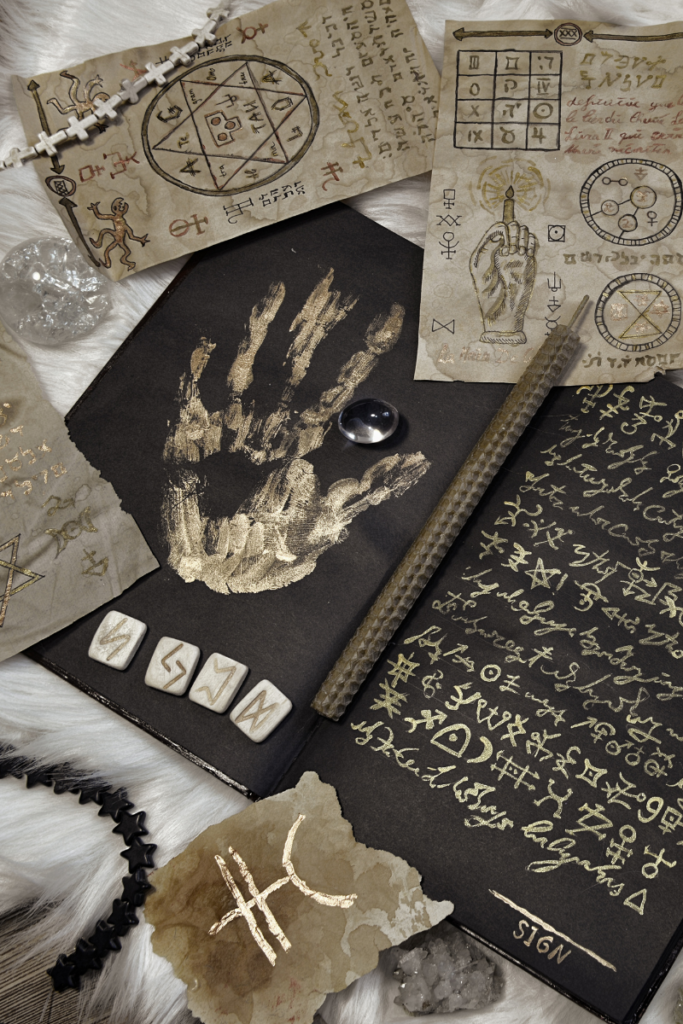
Keep the library private. Other people’s skepticism contaminates the intention, especially before results have shown up. You don’t need anyone’s opinion on your practice. You need data.
Don’t burn your sigils or throw them away when they’ve done initial work. A sigil you created years ago isn’t finished; it’s seasoned. The longer a sigil exists and the more intentional energy it’s been exposed to, the stronger it gets. Your library is a living document. Treat it that way.
Frequently Asked Questions
What is beginner sigil magic used for?
Sigil magic is used to encode a specific intention into a symbol that bypasses conscious resistance and lands in the subconscious. Practitioners use it for career goals, creative output, relationships, habit change, personal transformation. There’s no prescribed category. Whatever you want to shift, you can build a sigil for it. The one non-negotiable is a clear, specific intention. Vague goals produce vague results. Pick one thing and mean it.
Do I have to use orgasm to charge a sigil?
No. Orgasm is one of the most effective methods because it so completely overrides analytical thought, but it isn’t the only option. Physical exhaustion, rhythmic breath work, deep trance, and the hypnagogic zone between waking and sleep all work. The common factor is a genuine shift in brain state. Halfway measures (where you’re still mostly in your head) don’t produce the same encoding. Whatever method you use, it has to actually take you out.
How do I know if my sigil is working?
Usually you can’t tell immediately, and that’s by design. Sigils work through gradual shift and circumstance rather than overnight change. The best indicator is movement in the general direction of your intention over time. This is why the library matters: you’ll notice patterns across months of records that you’d completely miss if you’re relying on memory alone. Stop looking for fireworks and start looking for drift.
Can I make more than one sigil at a time?
Yes, but work each one separately. Create, charge, and release one before moving to the next. Running several simultaneously is possible; it just makes tracking nearly impossible, and tracking is where the real learning lives. If you’re new to sigil work, one at a time until the method is solid. You’re building a practice, not a backlog.
How long does it take for a sigil to work?
There is no standard timeline for beginner sigil magic to work. Some move in a week or two. Others take a full season. Variables include how specific the intention was, how deeply you charged it, and how well you’ve let go of lust of result. Give each sigil at least ninety days before logging it inactive. Results often show up in the last place you’re looking, which is exactly why you’re keeping a library instead of relying on memory.
Disclaimer: The content on this site is for informational and entertainment purposes only. It is not a substitute for professional medical, psychological, or psychiatric advice, diagnosis, or treatment. Always consult a qualified healthcare provider with any questions you may have.
Want more of this? Aunt Mellie writes about crystals, runes, moon cycles, and the brain science of why you keep undoing your own progress. Subscribe to the newsletter and she’ll show up in your inbox with the real stuff: no toxic positivity, no pretension, just what actually works.