Heads up: some links on this page are affiliate links. That means if you buy something through one of those links, Aunt Mellie may earn a small commission — at no extra cost to you. She only recommends stuff she actually believes in. See the full Disclaimer for details.
You came here for spiritual content. You’re about to get a mirror instead. Sorry not sorry.
Your Spiritual Practice Might Be People-Pleasing in a Pretty Dress
There is a version of spiritual practice that looks, from the outside, exactly like the real thing. The journals. The altar. The carefully curated crystal collection. The morning pages and the moon rituals and the affirmations written in good handwriting in a nice notebook. All of it present and accounted for.
And underneath it, if you’re honest — if you’re willing to sit with the uncomfortable version of this question — a familiar feeling. Am I doing this right? Am I spiritual enough? What would [insert person you’ve given authority to] think of my practice?
That’s not spirituality. That’s spiritual practice people-pleasing — and it’s more common than anyone in the spiritual community wants to admit.
How Do You Know If Your Spiritual Practice Is People-Pleasing?
The tell is the ‘shoulds.’ If your practice is built on what you’re supposed to do, how it’s supposed to look, and whether it measures up to someone else’s standard — you’re not practicing spirituality. You’re performing it. And the performance is for an audience, even when that audience is just the voice in your own head.
People-pleasing spiritual practice sounds like:
- I need to be more disciplined about my practice. (Who told you your practice needs to look a certain way?)
- I’m not really a spiritual person. (Compared to whom? By whose standard?)
- My practice is kind of a mess right now. (Since when is a mess incompatible with being spiritual?)
- I should probably be meditating more. (Should according to what? The Instagram account that makes you feel behind?)
Every “should” in your spiritual practice deserves to be interrogated. Hard. Because “should” is almost never your wisdom talking. It’s the voice of someone else’s expectations that you’ve been hauling around so long it started to sound like your own.
Why Does Spiritual People-Pleasing Happen in the First Place?
Most of us came to spirituality through a doorway of not fitting in somewhere. Organized religion didn’t work. Mainstream culture felt empty. We were the kid who felt things too much, or thought about death at ten, or couldn’t shake the feeling that something was going on underneath ordinary life that nobody was talking about.
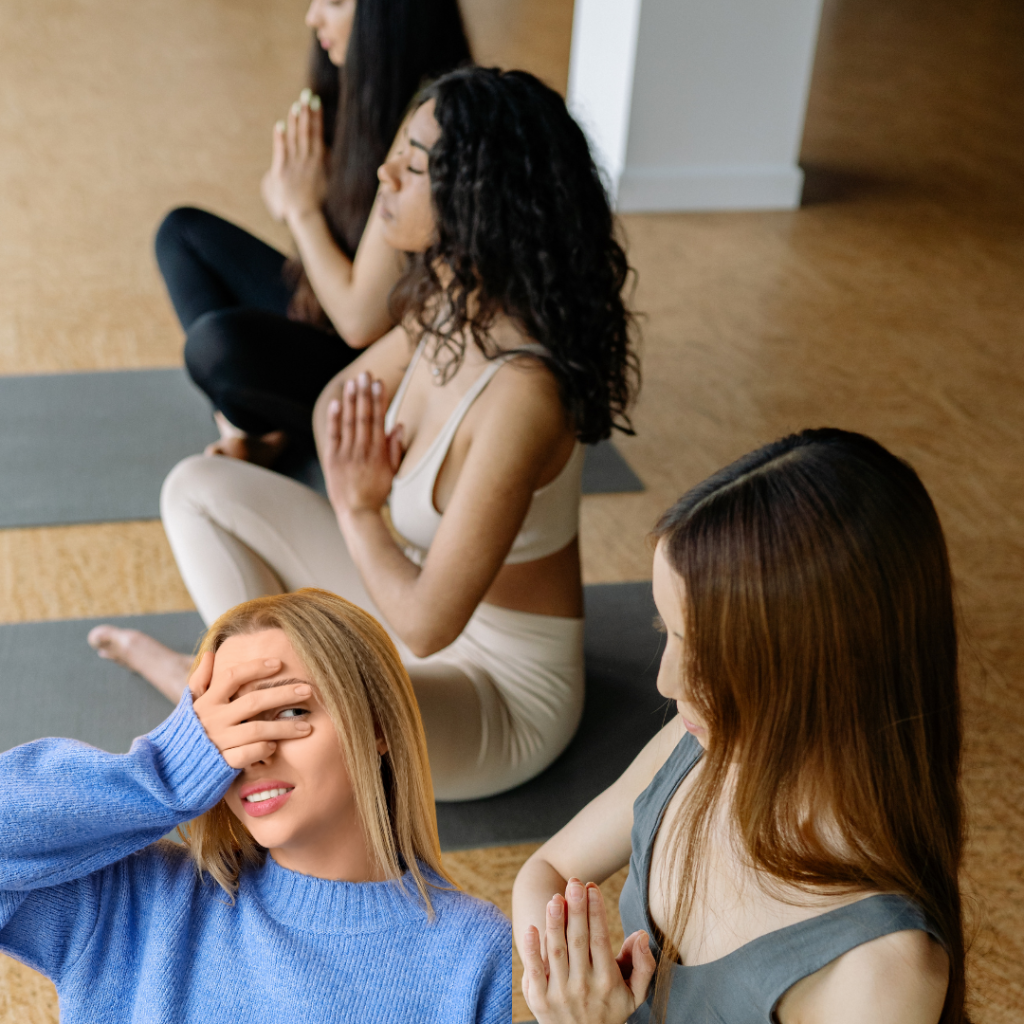
So we found our people. And our people were wonderful. And our people also had opinions about how to do this correctly.
And because we’d been looking for belonging for a long time — and because belonging requires conformity — we absorbed those opinions. We started measuring our practice against the group standard. We started performing spirituality for an audience, even when the audience was just us in our own heads.
The thing about people-pleasing is that it’s adaptive. It worked. It got you in the door. It kept you in community. At some point, though, it stopped being a strategy and started being a cage. And spiritual practice people-pleasing is a particularly sneaky cage because it’s dressed up in all the language of authenticity and growth.
What Does an Authentic Spiritual Practice Actually Look Like?
Real spiritual practice is private, idiosyncratic, and frequently ugly. It doesn’t look good on camera. It looks like sitting on the bathroom floor because that’s where you ended up. It looks like a crystal you carry in your coat pocket for six months without doing anything formal with it. It looks like talking to the moon and feeling stupid for about thirty seconds and then feeling better anyway.
It looks like practice that fits your life — your actual life, not the aspirational version — and that you return to because it genuinely helps you, not because you’d feel guilty skipping it.
The practice that works is the one you’ll actually do. Not the one that looks most impressive. Not the one with the highest barrier to entry. Not the one that signals your level of seriousness to the community you’re trying to be accepted by.
The one you’ll actually do.
How Do You Build a Practice That’s Actually Yours?
Here’s the uncomfortable question that cuts through all of it:
If no one would ever know – if there was no community to belong to, no Instagram to post to, no framework to measure yourself against – what would your practice look like?
What would you actually do? What would you drop immediately? What would you keep?
Whatever you’d keep is yours. Start there. Build from there.
Everything else is optional. Including the pretty notebook.
Want more of this? Aunt Mellie has opinions about your life and absolutely no hesitation about sharing them. Subscribe to the newsletter and she’ll show up in your inbox with the straight talk nobody else in your life has the guts to give you — no sugarcoating, no hedging, just what you actually needed to hear.
Frequently Asked Questions
What is spiritual practice people-pleasing?
Spiritual practice people-pleasing is when your practice is shaped more by what you think you’re supposed to do — or how it looks to others — than by what actually helps you. It can look like real spiritual work from the outside. On the inside it feels like performance, obligation, or never quite being enough.
How do I know if my spiritual practice is people-pleasing?
The clearest signal is how many ‘shoulds’ are running the show. If you regularly feel behind, not disciplined enough, or like your practice wouldn’t impress the people you respect — that’s not your inner wisdom. That’s someone else’s expectations you’ve been carrying so long they started to sound like your own.
Is it okay if my spiritual practice looks different from everyone else’s?
Not only okay — that’s the goal. A practice built to match someone else’s standard holds only as long as you’re performing for that audience. A practice built around what actually helps you holds through a bad week, a move, a divorce, a dead phone battery. Different is the point.
What if my spiritual practice is inconsistent or messy?
Inconsistent practice is still practice. The myth that real spiritual people maintain a perfect, unbroken routine is one of the most effective ways to keep people feeling like they’re doing it wrong. Real life interrupts. Real practice picks back up. The mess doesn’t disqualify you.
How do I stop comparing my spiritual practice to others?
Start by auditing where the comparison is coming from — which accounts, which communities, which voices make you feel behind. Then ask whether the standard they’re modeling is actually working for them or just photographing well. Most performance-based spiritual content is aspirational theater, not documentation of a real practice.
What if I don’t have a formal spiritual practice at all?
Then you probably have an informal one you’re not counting. The walk you take when you’re overwhelmed. The way you talk to yourself when something goes wrong. The things you reach for when you need to feel grounded. Those count. Name what you already do before you decide you need to add anything.efore you decide you need to add anything.
Want more of this? Aunt Mellie has opinions about your life and absolutely no hesitation about sharing them. Subscribe to the newsletter and she’ll show up in your inbox with the straight talk nobody else in your life has the guts to give you — no sugarcoating, no hedging, just what you actually needed to hear.